
Crafting Your Winning Art Portfolio for College Admission
Unlock your potential and impress admissions committees with a portfolio that showcases your unique artistic voice and skills.
Start Your Portfolio JourneyKey Takeaways
- ✓ A college art portfolio is often the most critical component of your application to art programs.
- ✓ Admissions committees look for technical skill, creativity, conceptual thinking, and potential for growth.
- ✓ Most portfolios require 10-20 pieces, including observational drawings and pieces demonstrating diverse media.
- ✓ Early planning, often starting in junior year of high school, is crucial for developing a strong body of work.
How It Works
Research the specific portfolio guidelines for each art program you're applying to. Requirements can vary significantly between institutions.
Select pieces that demonstrate your strongest technical abilities, creative thinking, and a range of artistic interests. Quality over quantity is paramount.
Photograph or scan your artwork with high-quality lighting and resolution. Poor documentation can detract from even the best artwork.
Provide concise yet insightful descriptions for each piece, explaining your artistic process, intentions, and the concepts explored. This contextualizes your work.
The Foundation: Understanding College Art Portfolio Expectations
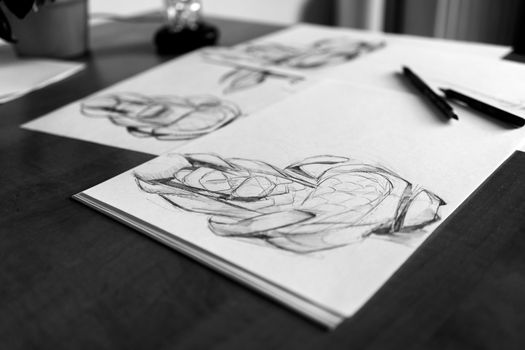 Photo: Karol D / Pexels
First and foremost, most institutions emphasize the importance of observational drawing. This isn't about being a photorealistic copier; it's about demonstrating your ability to see, analyze, and translate three-dimensional forms onto a two-dimensional surface. Expect to include several pieces drawn from direct observation – think still life, figure drawing, landscapes, or portraits. These works reveal your understanding of proportion, perspective, light, shadow, and anatomy. They are the bedrock upon which more experimental or conceptual pieces are built. Without a solid foundation in observational skills, even the most innovative ideas can fall flat.
Beyond foundational skills, committees look for evidence of creativity and conceptual development. This means showcasing work that goes beyond mere replication. Have you experimented with different media? Explored personal themes? Solved visual problems in unique ways? Your portfolio should demonstrate your willingness to take risks, learn from mistakes, and push the boundaries of your own understanding. They want to see a spark, an individuality that suggests you will contribute meaningfully to their artistic community. Think about the stories your art tells and the questions it asks.
The number of pieces typically ranges from 10 to 20, but this can vary significantly. Always check the specific requirements of each institution. Some might ask for a sketchbook or process work, while others might prefer finished pieces. Diversity in media is often encouraged; don't limit yourself to just one type of art. Show them you can work with paint, charcoal, sculpture, digital art, photography, or even mixed media. This demonstrates versatility and an eagerness to explore various artistic avenues. Remember, your portfolio is a curated collection, not a complete archive of everything you've ever made. Each piece should serve a purpose and contribute to the overall narrative of your artistic identity.
Finally, colleges are assessing your potential for growth. They don't expect you to be a fully formed master artist; they expect you to be a promising student ready to learn and evolve. Your portfolio should hint at where you're headed, what fascinates you, and how you approach challenges. It's an exciting opportunity to introduce yourself as an aspiring artist, and a well-thought-out collection can speak volumes about your dedication and vision. Prepare to spend considerable time refining your selections and ensuring each piece reflects your best work and creative spirit. This foundational understanding will guide every subsequent step in building a strong art portfolio for college admission.
Curating Your Collection: Selecting and Arranging Your Best Artworks
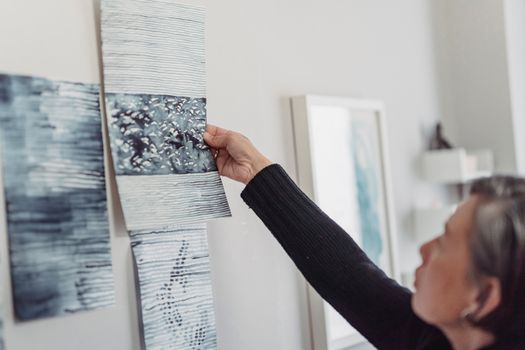 Photo: Greta Hoffman / Pexels
Start by laying out all your potential pieces. This could be physically on a floor or digitally on a screen. Look at them critically. Which ones immediately stand out? Which ones demonstrate strong technical skill, unique problem-solving, or a compelling aesthetic? Many admissions officers advise including a mix of observational work and more personal, conceptual pieces. Observational drawings from life – figure studies, still life, landscapes – are almost universally required. These show your fundamental understanding of form, light, and space. Don't underestimate their importance; they are often the first things reviewers look at to gauge your foundational abilities.
After establishing your foundational pieces, integrate works that showcase your creativity and range. Have you experimented with different mediums like oil paint, watercolor, printmaking, digital illustration, sculpture, or photography? Including diverse media demonstrates versatility and an eagerness to explore. Have you worked on a series that explores a particular theme or concept? A coherent series can be very impactful, showing depth of thought and sustained artistic inquiry. Avoid including pieces that are unfinished, rushed, or don't represent your best effort. One weak piece can detract from an otherwise strong portfolio.
Consider the 'flow' of your portfolio. While there's no single correct order, a common approach is to start with a strong piece that grabs attention, include your core observational drawings early on, intersperse your more creative or conceptual works, and end with another powerful piece. Some prefer to show their most accomplished work at the beginning and end, creating a strong impression. Others prefer to show a progression of skill or ideas. The goal is to keep the reviewer engaged and to showcase your best attributes strategically.
Additionally, pay attention to the overall impression. Does your portfolio feel cohesive? Does it tell a story about you as an artist? While diversity is good, a portfolio that feels completely disjointed might suggest a lack of focus. If you have a specific artistic interest or area of specialization, make sure that is well-represented, but not to the exclusion of fundamental skills. Remember, the admissions committee is trying to envision you as a student in their program. Your portfolio should provide them with compelling reasons to believe you would thrive there. This curation process is often iterative, requiring multiple rounds of selection, feedback, and refinement. Don't be afraid to ask trusted art teachers, mentors, or even peers for their honest opinions during this crucial stage. Their fresh perspective can help you identify pieces that shine and those that might be better left out. This careful selection and arrangement are what elevate a collection of art into a powerful art portfolio for college admission.
Presenting Your Work: Documentation and Digital Submission Strategies
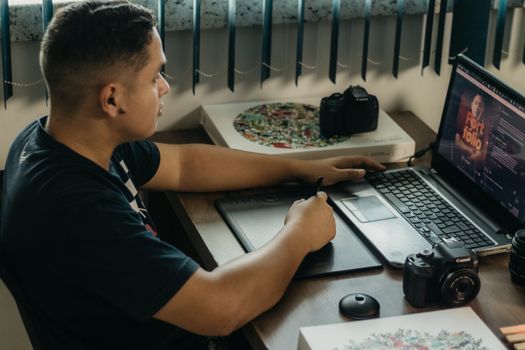 Photo: Kawê Rodrigues / Pexels
For physical artworks, high-quality photography is essential. Use a good camera (even a modern smartphone can work if used correctly) and ensure even, natural lighting. Avoid harsh shadows, reflections, or glare, especially on glossy surfaces. Position your artwork squarely against a neutral, uncluttered background. For two-dimensional pieces, shoot them head-on, ensuring no distortion. For three-dimensional works like sculpture, take multiple shots from different angles to convey its form and scale. If your piece has intricate details, include a close-up shot. Make sure the colors in your photographs accurately represent the original artwork. This might require some basic photo editing, but avoid over-saturating or altering the piece significantly.
Scanning is often preferred for flat artwork like drawings, prints, or collages. A good flatbed scanner can capture fine details and true colors more accurately than photography. Ensure your scanner bed is clean and the artwork is flat against the surface to avoid distortions. If your artwork is larger than your scanner, you might need to scan it in sections and stitch it together using photo editing software, maintaining seamless transitions.
Once documented, you'll likely be submitting your portfolio digitally through platforms like SlideRoom, Acceptd, or directly through the college's application portal. Pay extremely close attention to the file format, resolution, and size requirements. Most platforms specify JPEG or PNG for images and sometimes MP4 for video (if applicable). Adhering to these technical specifications is non-negotiable; incorrectly formatted files might not upload or display properly, potentially leading to your work being overlooked.
Each piece in your digital portfolio will require descriptive information. This is your opportunity to provide context and insight into your work. Typically, you'll be asked for the title of the piece, the medium used (e.g., "Charcoal on newsprint," "Oil on canvas," "Digital painting"), the dimensions (height x width x depth, if 3D), and the date of completion. Crucially, many platforms also allow for a brief artist statement or description for each piece. Use this space wisely. Explain your intentions, the concepts you explored, your process, and any challenges or breakthroughs you encountered. This commentary helps the admissions committee understand your thought process and intellectual engagement with your art. It transforms a mere image into a testament to your artistic and intellectual growth.
Finally, always preview your digital portfolio exactly as the admissions committee will see it before submitting. Check for broken links, incorrect images, typos in descriptions, and proper formatting. A polished, well-organized digital presentation reinforces your professionalism and respect for the application process, making your portfolio stand out for all the right reasons. This meticulous attention to detail in presentation is a vital component of a successful art portfolio for college admission.
Common Mistakes to Avoid and Expert Tips for Success
 Photo: Felicity Tai / Pexels
Common Mistakes to Avoid:
- Including too much fan art or copyrighted material: While you might enjoy drawing characters from popular culture, admissions committees want to see your original voice and ideas. Limit or exclude fan art; focus on pieces that showcase your unique perspective.
- Poor quality documentation: As discussed, blurry photos, bad lighting, or distorted images can severely hinder the impact of your artwork. Invest time in proper photography or scanning.
- Lack of observational drawing: Many students overlook the importance of drawing from life. Without these foundational skills, even the most imaginative work can appear weak. Include at least 3-5 strong observational pieces.
- Submitting unfinished or rushed work: Every piece in your portfolio should be a finished, polished representation of your best effort. Incomplete or hastily created pieces suggest a lack of dedication.
- Ignoring specific college requirements: Each institution has unique guidelines regarding the number of pieces, media accepted, and digital format. Failing to adhere to these can lead to your application being dismissed.
- Lack of variety: A portfolio filled with 15 paintings of flowers, no matter how beautiful, demonstrates limited range. Show your versatility across media, subjects, and conceptual approaches.
- Over-editing or misrepresenting artwork: While minor color correction is fine, drastically altering your artwork in post-production can be misleading and unprofessional.
- Weak artist statements/descriptions: Generic or poorly written descriptions fail to provide valuable context. Use this space to articulate your artistic intentions and process.
Expert Tips for Success:
- Start early: Begin working on your portfolio in your junior year of high school, if not earlier. This gives you ample time to experiment, refine, and produce a strong body of work without feeling rushed.
- Seek feedback: Share your portfolio drafts with trusted art teachers, mentors, and even college representatives at portfolio review events. Their constructive criticism is invaluable.
- Tell a story: Arrange your pieces to create a cohesive narrative about your artistic journey and interests. Each piece should contribute to the overall impression you want to make.
- Show process: Some colleges appreciate seeing sketchbook pages, preliminary studies, or process work. This demonstrates your creative thinking and problem-solving skills.
- Be authentic: Let your personality and unique artistic voice shine through. Don't try to guess what you think they want to see; instead, present what genuinely excites you.
- Proofread everything: Before submitting, meticulously proofread all titles, descriptions, and any accompanying essays. Typos can convey a lack of attention to detail.
- Consider a 'wildcard' piece: If allowed, include one piece that might be a bit unconventional but truly represents your creative spirit and pushes boundaries.
- Practice presenting your work: If you have an in-person interview or virtual review, be prepared to articulate your artistic choices and influences confidently.
By thoughtfully navigating these common pitfalls and leveraging expert advice, you can assemble an art portfolio for college admission that truly reflects your potential and significantly enhances your application.
Comparison
| Feature | Top-Tier Art School | Liberal Arts College (Art Dept) | Community College (Art Program) |
|---|---|---|---|
| Portfolio Focus | High concept, technical mastery, innovation | Foundational skills, creative potential, breadth | Skill development, basic understanding |
| Required Pieces | 15-20 (often specific media) | 10-15 (mix of observational/creative) | 8-12 (focus on core skills) |
| Observational Drawing | ✓ (highly emphasized, advanced) | ✓ (essential, solid foundation) | ✓ (basic competence) |
| Conceptual Work | Highly valued, demonstrates critical thinking | Encouraged, shows personal voice | Less emphasis, more on technique |
| Media Diversity | Expected, shows experimental drive | Recommended, shows versatility | Good to have, but not critical |
What Readers Say
"This guide was a game-changer for my art portfolio for college admission. I followed the advice on observational drawing and my portfolio felt so much stronger. I got into my top choice!"
Sarah Chen · Boston, MA"The tips on digital documentation were incredibly helpful. My previous photos were terrible. After reading this, I re-shot everything and the difference was night and day."
Alex Rodriguez · Austin, TX"I used the advice on curating my art portfolio for college admission and secured a scholarship to my dream art school. The emphasis on telling a story with my work really resonated with the reviewers."
Emily White · Portland, OR"The guide provided a solid framework, though I wish there were more examples of successful conceptual pieces. Still, the foundational advice was indispensable for my application."
David Kim · Chicago, IL"As a parent helping my daughter, this article demystified the art portfolio for college admission process. It broke down complex requirements into understandable steps, reducing a lot of stress."
Jessica Lee · Los Angeles, CAFrequently Asked Questions
What is the most important element of an art portfolio for college admission?
While all elements are crucial, the most important is often a strong foundation in observational drawing. This demonstrates your ability to see and translate the world accurately, which is a fundamental skill art programs seek, showing potential for further development across various artistic disciplines.
Do I need to be a perfect artist to get into a good art school?
No, colleges don't expect perfection. They are looking for potential, passion, technical skill, and creative thinking. Your portfolio should demonstrate a willingness to learn, experiment, and grow, rather than being a collection of flawless masterpieces.
How many pieces should I include in my portfolio?
The typical range is 10-20 pieces, but this varies significantly by institution. Always check the specific requirements of each college you apply to, as some may have strict limits or minimums.
Is it worth paying for a portfolio review?
Yes, if possible. Many colleges offer free portfolio review events, and external professional reviews can provide invaluable feedback from experienced artists or admissions counselors. This can help you refine your selections and presentation before official submission, increasing your chances of acceptance.
Can I include digital art or photography in my portfolio?
Absolutely! Most contemporary art programs encourage or even require the inclusion of digital art, photography, video, or other time-based media, depending on your intended major. Ensure these pieces are well-documented and meet the specific file format requirements.
Who should create an art portfolio for college admission?
Any high school student applying to a college or university art program, whether for a BFA (Bachelor of Fine Arts), BA (Bachelor of Arts with an art major), or even certain art-related scholarships, will likely need to submit an art portfolio as part of their application.
What if my art style isn't 'traditional' enough?
Art schools value originality and diverse perspectives. While foundational skills are important, a unique, non-traditional style that demonstrates strong conceptual thinking and technical competence can be a significant asset. Ensure your work is well-executed and thoughtfully presented.
Will AI-generated art be accepted in an art portfolio in the future?
While policies are still evolving, many art institutions are cautious about AI-generated art due to concerns about authorship and skill demonstration. For now, it's generally safer to focus on human-created original work that showcases your personal artistic process and abilities.
Your art portfolio for college admission is more than just a collection of artworks; it's your visual voice, your story, and your future. By meticulously planning, curating, and presenting your best work, you can create a portfolio that truly stands out and opens the doors to your artistic aspirations. Start building your legacy today.