Mastering Minimalist Portfolio Website Design for Impact
minimalist portfolio website design

Mastering Minimalist Portfolio Website Design for Impact

Unlock the power of simplicity to showcase your work effectively and stand out in a crowded digital landscape.

Design Your Minimalist Portfolio

Key Takeaways

  • ✓ Minimalism enhances focus on your work, not the design.
  • ✓ Faster loading times improve user experience and SEO.
  • ✓ A clean design communicates professionalism and sophistication.
  • ✓ It's easier to maintain and update a minimalist portfolio.

How It Works

1
Define Your Core Message

Before designing, identify the key message you want your portfolio to convey. This clarity will guide all design choices, ensuring every element serves a purpose.

2
Select Essential Projects

Curate only your strongest, most relevant work. A minimalist approach means quality over quantity, showcasing pieces that best represent your skills and aspirations.

3
Choose a Clean Layout & Typography

Opt for simple grid layouts and legible fonts. These foundational elements are crucial for readability and creating an uncluttered, professional aesthetic that highlights your content.

4
Optimize for Performance & Responsiveness

Ensure your site loads quickly and looks great on all devices. A minimalist design inherently supports faster performance and a seamless experience for every visitor.

The Power of Simplicity: Why Minimalist Portfolio Design Works
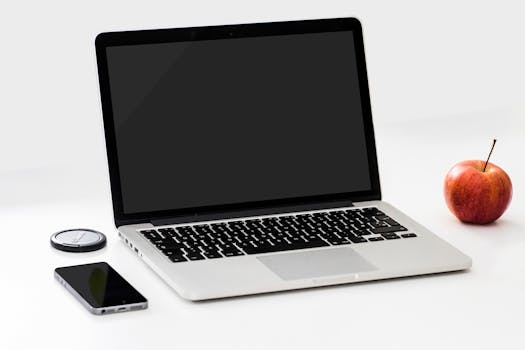
A minimalist workspace featuring a laptop, smartphone, and an apple on a clean white desk. Photo: karsten madsen / Pexels
In an increasingly noisy digital world, a minimalist portfolio website design isn't just a trend; it's a strategic advantage. The core principle of minimalism in design is to strip away anything that doesn't add value, leaving only the essentials. For a portfolio, this means putting your work front and center, without distractions. Imagine walking into a gallery where the art is perfectly lit, against a clean, neutral backdrop – that's the experience a minimalist portfolio creates for your visitors. It allows your creative output to breathe, to be truly seen and appreciated for its intrinsic merit, rather than competing with flashy animations or overwhelming color schemes. One of the most compelling reasons to embrace a minimalist approach is the enhanced user experience (UX). When a website is clean and uncluttered, navigation becomes intuitive, and the content is easily digestible. Visitors aren't forced to sift through extraneous elements to find what they're looking for, leading to lower bounce rates and higher engagement. This focus on clarity also translates into faster loading times. Fewer elements, smaller file sizes, and optimized code contribute to a snappier site, which is crucial in today's fast-paced digital environment. Google, for instance, prioritizes site speed in its ranking algorithms, meaning a minimalist design can even give you an SEO edge. Beyond functionality, a minimalist aesthetic communicates professionalism, confidence, and sophistication. It suggests that you trust the strength of your work to speak for itself, without needing embellishments. This subtle yet powerful message resonates deeply with potential clients and employers who are often looking for clear communication and a well-defined artistic voice. Moreover, maintaining a minimalist portfolio is significantly easier. With fewer components, updates are simpler, and the risk of design elements clashing or breaking is minimized. This long-term maintainability is a huge benefit, allowing you to focus more on your creative projects and less on website upkeep. Think of it as a timeless wardrobe – classic pieces never go out of style, and a well-designed minimalist portfolio will remain relevant and impactful for years to come. For more insights on building a compelling online presence, explore resources on how to create an effective portfolio that truly showcases your skills.

Key Elements of an Effective Minimalist Portfolio
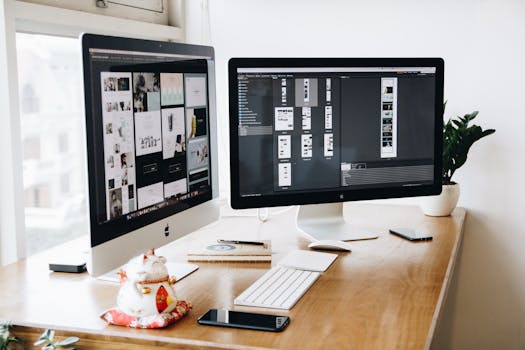
A well-organized design workspace with dual monitors and design software on display. Photo: Tranmautritam / Pexels
Building an effective minimalist portfolio requires a thoughtful curation of elements, ensuring each component serves a distinct purpose without adding visual clutter. The foundation of any strong portfolio is, of course, your work. In a minimalist context, this means presenting only your absolute best projects. Quality over quantity is paramount. Instead of showcasing every piece you've ever created, select 5-10 projects that highlight your diverse skills, demonstrate problem-solving capabilities, and align with the type of work you aspire to do. Each project should have a concise, compelling case study that explains your role, the challenge, your process, and the outcome, using minimal text and strong visuals. Whitespace, often overlooked, is a critical element in minimalist design. It's not just empty space; it's a powerful design tool that gives elements room to breathe, improving readability and drawing the eye to important content. Generous use of whitespace around images, text blocks, and navigation elements creates a sense of calm and sophistication. Typography also plays a pivotal role. Choose one or two highly legible fonts – one for headings and one for body text – that complement each other. Sans-serif fonts are often preferred for their clean, modern aesthetic. Ensure sufficient contrast between text and background for optimal readability. Navigation should be intuitive and unobtrusive. A simple top-bar menu, a hamburger icon on mobile, or even a single-page scroll design are common minimalist approaches. The goal is to make it effortless for visitors to find your work, your 'About' page, and your contact information. Avoid complex mega-menus or excessive sub-navigation. Your 'About Me' page should be brief, professional, and personal, offering a glimpse into your personality and philosophy without lengthy autobiographies. Include a professional headshot and a concise statement about your expertise and passion. Finally, a clear and prominent call to action (CTA) is essential. Whether it's a 'Contact Me' button, a 'Download Resume' link, or a 'Hire Me' prompt, ensure it's easy to spot and encourages engagement, guiding potential clients to the next step.

Choosing the Right Platform and Tools for Your Minimalist Portfolio
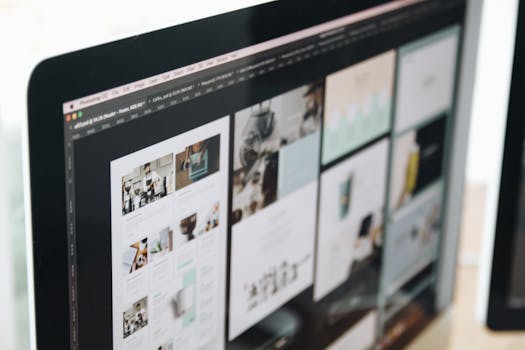
A modern computer screen displaying web design work, showcasing creative visuals in a workspace. Photo: Tranmautritam / Pexels
Selecting the appropriate platform and tools is crucial for translating your vision of a minimalist portfolio website design into a functional, beautiful reality. The right choice depends on your technical comfort level, budget, and specific needs. For those with little to no coding experience, website builders like Squarespace, Wix, and Adobe Portfolio offer intuitive drag-and-drop interfaces with stunning, pre-designed minimalist templates. Squarespace, in particular, is renowned for its clean aesthetic and strong typography options, making it a favorite among creatives. These platforms handle hosting, security, and responsiveness, allowing you to focus solely on content curation and design customization within their frameworks. They are an excellent starting point for achieving a professional look without diving into complex code. If you require more flexibility and control, or if you're comfortable with a bit of a learning curve, WordPress is an incredibly powerful option. While it requires more setup (hosting, domain, theme selection), its vast ecosystem of themes and plugins allows for unparalleled customization. Many premium WordPress themes are specifically designed with minimalism in mind, offering clean layouts, excellent performance, and robust features that can be tailored to your exact specifications. Platforms like Elementor or Beaver Builder, which are page builders for WordPress, provide a visual editing experience similar to website builders but with the underlying power of WordPress. This gives you the best of both worlds: ease of use for design and the extensibility of a full CMS. Beyond the platform itself, consider tools for asset management and optimization. Image optimization is paramount for minimalist portfolios to ensure fast loading times without sacrificing visual quality. Tools like TinyPNG or Compressor.io can drastically reduce file sizes. Version control for your projects (especially if you're a developer or designer collaborating) is also important. Lastly, don't forget analytics. Integrating Google Analytics will provide invaluable insights into how visitors interact with your portfolio, allowing you to refine your design and content over time. For those looking to dive deeper into presenting their work effectively, understanding various types of portfolios can also inform your platform choice.

Common Mistakes to Avoid in Minimalist Portfolio Design
A vibrant multicolored background featuring the text 'PORTFOLIO' in pink font on colorful paper. Photo: Ann H / Pexels
While the principles of minimalist portfolio website design seem straightforward, there are several common pitfalls that can undermine its effectiveness. Avoiding these mistakes is crucial to ensure your portfolio truly stands out for the right reasons. **Mistakes to Avoid:** * **Too Much Text, Not Enough Visuals:** The essence of a portfolio is to showcase your visual work. While context is important, don't overwhelm visitors with lengthy paragraphs. Use concise captions, bullet points, and strong visuals to tell your story. Let your work do the talking. * **Over-reliance on Trends:** Minimalism is timeless, but some interpretations can lean into fleeting design trends. Avoid elements that might quickly date your portfolio. Stick to classic layouts, legible typography, and a neutral color palette that won't go out of style. * **Ignoring Mobile Responsiveness:** A minimalist design should inherently be responsive, but it's a mistake to assume it will look good on all devices without testing. Always preview and test your portfolio on various screen sizes to ensure a seamless experience for every visitor. * **Lack of Clear Call to Action (CTA):** Even in a minimalist design, you need to guide your visitors. Don't make them guess what you want them to do next. A subtle yet clear CTA, like a 'Contact Me' button or a link to your resume, is essential. * **Poor Image Optimization:** High-resolution images are vital for showcasing your work, but unoptimized images will slow down your site significantly. This negates the speed benefits of minimalism. Always compress your images without sacrificing quality. * **Inconsistent Branding:** Even with minimal elements, maintain a consistent brand identity (logo, color palette, typography) throughout your portfolio. Inconsistency can make your site look disjointed and unprofessional. * **Hiding Essential Information:** While decluttering, ensure critical information like your contact details, 'About Me' section, and social links are still easily accessible. Minimalism doesn't mean invisibility. By being mindful of these common errors, you can craft a minimalist portfolio that is not only visually appealing but also highly functional and effective in showcasing your talents.

Comparison

FeatureSquarespaceWordPress (Self-Hosted)Adobe PortfolioWix
Ease of UseExcellentModerate-HighExcellentVery Good
CustomizationGood (Template-based)UnlimitedGood (Template-based)Very Good
Pricing (Monthly)$16-$26$5-$50 (Hosting+Theme)$9.99-$52.99 (Creative Cloud)$16-$45
SEO FeaturesGood Built-inExcellent (Plugins)Basic Built-inGood Built-in
MaintenanceLowHighLowLow
Best ForVisual creativesDevelopers/DesignersPhotographers/DesignersSmall businesses

What Readers Say

"Adopting a minimalist portfolio website design completely transformed my client inquiries. My work now truly shines, and I'm attracting projects that align perfectly with my aesthetic. It's incredibly effective."

Sarah J. · New York, NY

"I used to have a very busy portfolio, but after switching to a minimalist layout, my site speed improved drastically, and I've received much more positive feedback on its clarity and elegance."

Mark D. · Los Angeles, CA

"My new minimalist portfolio landed me a dream job! The recruiter specifically mentioned how professional and easy it was to navigate, allowing my design projects to speak for themselves without distraction."

Emily R. · Austin, TX

"While the minimalist approach is fantastic for showcasing work, I sometimes miss having a bit more space for experimental design elements. However, the benefits in terms of clarity and client focus far outweigh this minor point."

David L. · Chicago, IL

"As a freelance photographer, having a clean, fast-loading minimalist portfolio is non-negotiable. Clients need to see my images instantly, and this design style delivers perfectly across all devices."

Jessica M. · Seattle, WA

Frequently Asked Questions

What is the primary benefit of a minimalist portfolio website design?

The primary benefit is that it places your creative work directly in the spotlight, minimizing distractions. This allows potential clients or employers to focus entirely on your skills and projects, leading to clearer communication, better engagement, and a more professional presentation of your unique talents and aesthetic.

Will a minimalist design make my portfolio look generic or boring?

Absolutely not. A well-executed minimalist design is far from boring; it exudes sophistication and confidence. By focusing on strong typography, ample whitespace, and impactful visuals, your portfolio will appear elegant, timeless, and allow your distinct style to emerge through your work, rather than being overshadowed by over-the-top design elements.

How do I choose the right images for a minimalist portfolio?

For a minimalist portfolio, select only your highest quality, most impactful images that directly showcase your skills. Focus on clear, well-composed visuals with good lighting. Ensure they are optimized for web use to maintain fast loading times without compromising visual integrity. Less is more; curate your very best work.

Is a minimalist portfolio design more expensive to create?

Not necessarily. In many cases, it can be more cost-effective. While premium themes or builders might have a fee, the simplicity of the design often means less custom coding or complex integrations, reducing development time. Many excellent minimalist templates are available on popular platforms, offering great value.

How does a minimalist portfolio compare to a highly interactive, feature-rich portfolio?

A minimalist portfolio prioritizes clarity, speed, and direct presentation of work, often leading to better user experience and conversion rates. A highly interactive portfolio, while potentially impressive, risks overwhelming visitors, slowing down load times, and distracting from the actual work. The choice depends on your target audience and the nature of your creative discipline, but minimalism often wins for impact.

Who should consider using a minimalist portfolio website design?

A minimalist portfolio is ideal for almost any creative professional, including designers, photographers, illustrators, writers, architects, and developers. It's particularly effective for those who want their work to be the undeniable focus, presenting a clear, professional, and sophisticated image to potential clients, employers, or collaborators.

Are there any security concerns with minimalist portfolio websites?

Minimalist design itself does not inherently pose more or fewer security concerns than any other website design. Security largely depends on the platform and hosting provider you choose, as well as your practices (e.g., strong passwords, regular updates). Using reputable platforms and keeping your software updated will ensure your minimalist portfolio remains secure.

What are the future trends for minimalist portfolio design?

Future trends for minimalist portfolio design will likely emphasize even greater performance optimization, accessibility, and subtle, meaningful interactions. Expect continued refinement of typography, smart use of animation for emphasis, and personalized content delivery, all while maintaining the core principles of clarity and focus on the artist's work.

Embrace the power of simplicity and elevate your online presence. A minimalist portfolio website design is more than just an aesthetic choice; it's a strategic move to showcase your talent with unparalleled clarity and impact. Start building your refined, client-attracting portfolio today and let your work speak volumes.

Topics: minimalist portfolio website designclean portfolio websitesimple online portfolioweb design minimalismcreative portfolio tips
Leo List
Brampton weed
Adultwork EstrelaBet Vai de Bet R7 Bet Betão Galera Bet Rainbet Bet9ja Shop SportyBet BetKing Sisal Loto Foot Hollywoodbets YesPlay Odibets RushBet Jugabet BetWarrior BetCity MSport betPawa Fortebet